How is Holy Week Celebrated in Quito? Processions and Traditions in the Capital 2026
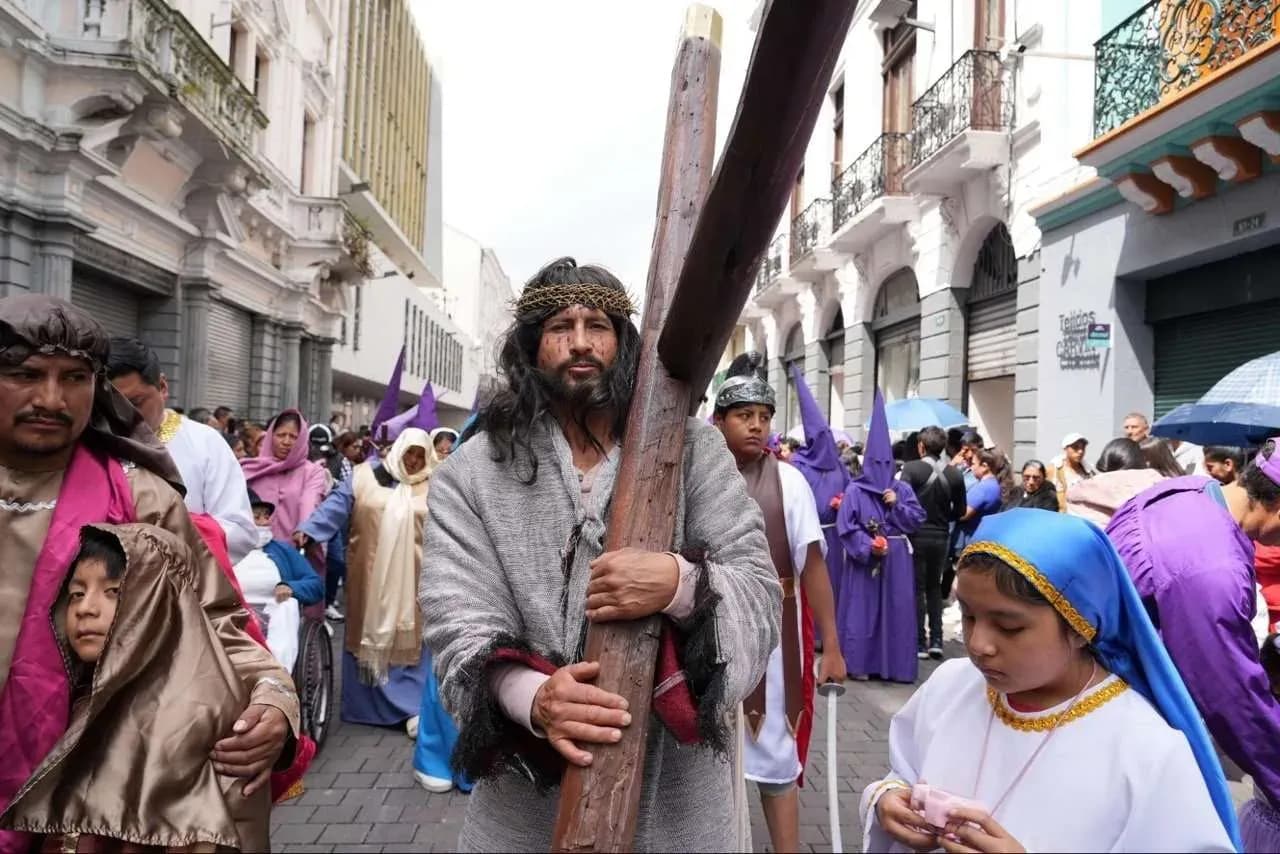
Quito, the capital of Ecuador, is a city where cobblestone streets and centuries-old churches hold a deep sense of spirituality and tradition. During Holy Week, this atmosphere intensifies, transforming the city into a living stage of devotion, religious art, and cultural expressions passed down through generations. From solemn processions to traditional dishes, Holy Week in Quito is much more than a religious celebration—it’s a reflection of the Quiteño identity, of its colonial history, and of the fusion between Indigenous roots and the Catholicism inherited from Spanish colonization.
Quito is getting ready to commemorate Holy Week 2026
(dates are pending confirmation), which this year will take place from April 13 to 20. And since you’re interested in learning how Holy Week is celebrated in Quito, we’ve put together this article to help you dive deeper into the origins, processions, and traditions that unfold during this Christian commemoration of the Passion of Christ.
Origins and Traditions#
The celebration of Holy Week in Quito dates back to colonial times, when Spanish missionaries evangelized Indigenous and mestizo communities through visual and theatrical rituals. Religious art—especially that of the Escuela Quiteña (Quito School)—played a key role in this process. Depictions of Christ’s suffering and that of the saints were used as teaching tools to convey the Christian message to the people.
Over time, these portrayals evolved into processions, dramatizations, and rituals that are now an essential part of Quito’s Holy Week. The city, declared a UNESCO World Cultural Heritage Site in 1978, still preserves many of these traditions, which have been enriched and adapted over the centuries.
Jesús del Gran Poder Procession
The most iconic event of Holy Week in Quito is undoubtedly the Procesión de Jesús del Gran Poder (Jesus of the Great Power Procession), which takes place on Good Friday and begins at the Iglesia de San Francisco, one of Quito’s oldest and most imposing churches.
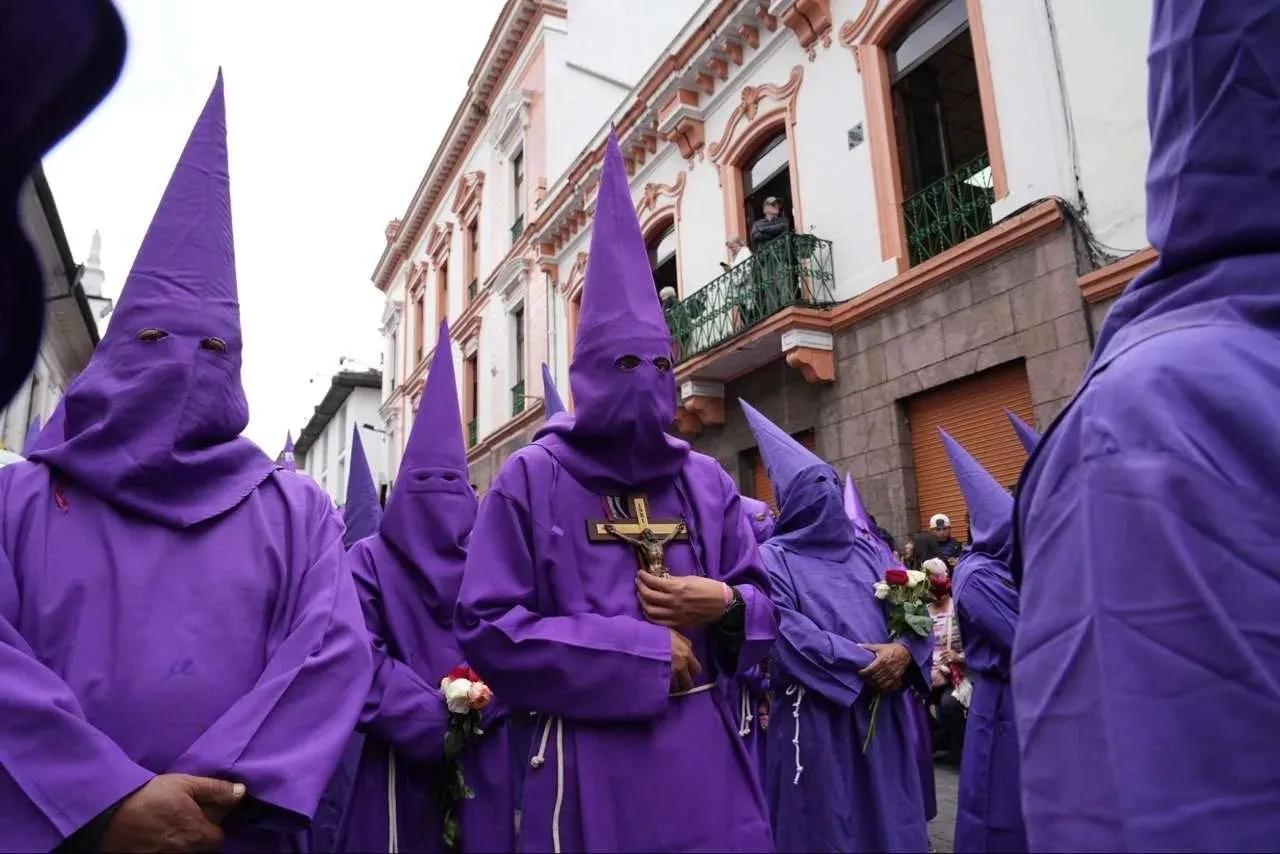
Cucuruchos in the Procession of Jesus del Gran Poder in the historic center of Quito
Photo by Quito Tour Bus
The Jesús del Gran Poder Procession draws thousands of people to the historic center of the capital, who gather to witness this powerful display of faith and to accompany the image of Jesús del Gran Poder—a 17th-century sculpture that depicts Christ carrying the cross. But what’s most striking about this religious expression isn’t just the image itself—it’s the presence of the Cucuruchos and Verónicas.
But who exactly are the Cucuruchos and the Verónicas?
The Cucuruchos are penitents dressed in purple robes with tall, cone-shaped hoods of the same color that completely cover their faces. These garments symbolize repentance and penance. Many walk barefoot, carrying heavy crosses or dragging chains as acts of devotion and sacrifice. Their attire, which has medieval European origins, was brought to Quito in the 16th century and has since evolved into one of the most distinctive symbols of Holy Week in the city.
The Verónicas, on the other hand, represent the figure of Saint Veronica, who, according to Christian tradition, wiped the face of Jesus on his way to Calvary. They wear black, white, or purple robes, along with lace mantillas and white handkerchiefs as signs of mourning. Like the Cucuruchos, many of them walk barefoot.
Want to learn more about the iconic figures of Holy Week in Quito? Click this link: https://visitquito.ec/semana-santa-quitena-2025/
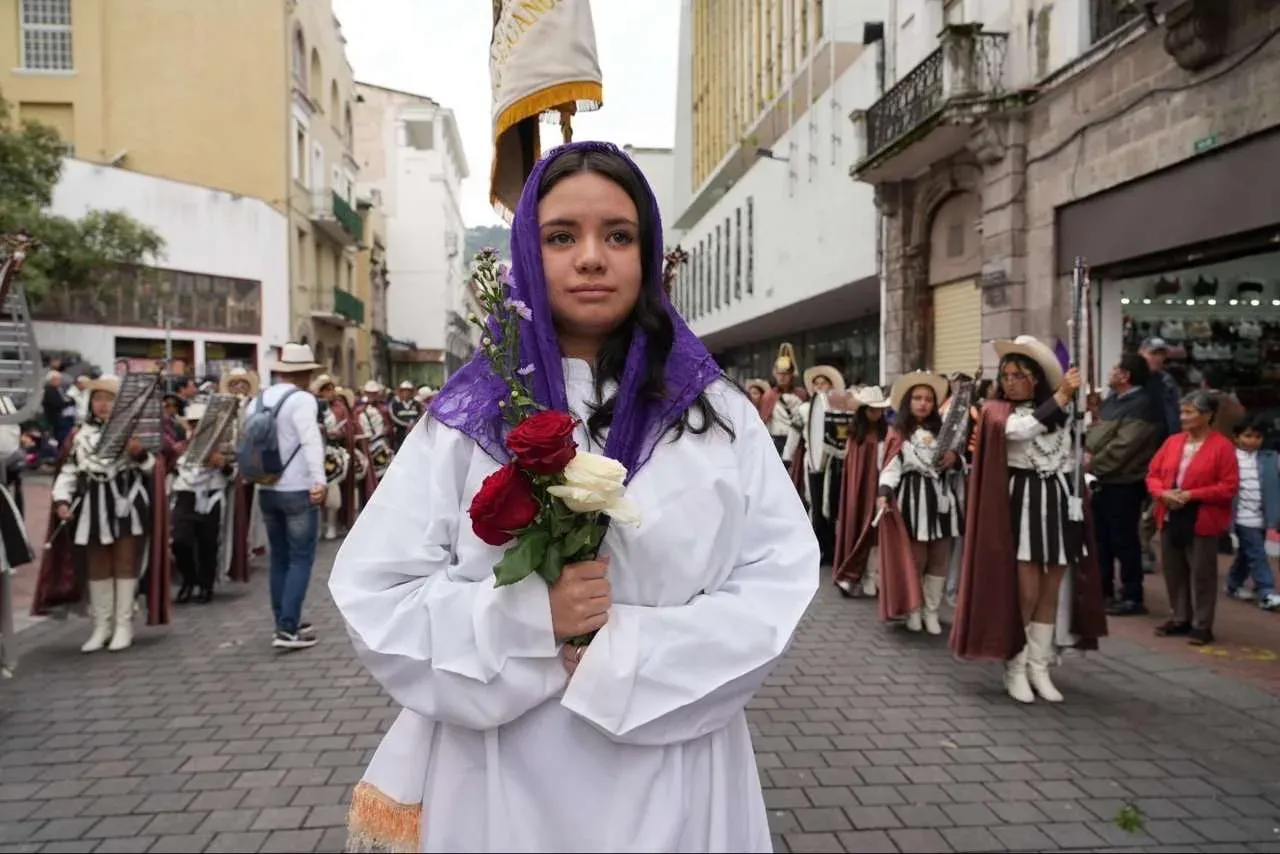
Verónicas in the Procession of Jesús del Gran Poder in Quito’s historic center
Photo by Quito Tour Bus
Other Celebrations
Throughout Holy Week, other emblematic events also take place in the historic center of the city, such as Palm Sunday and the traditional Arrastre de Caudas (Dragging of the Capes). The latter is a liturgical ceremony meant to commemorate the death of Jesus and celebrate his triumph over it. Quito is the only city in the country that still preserves this religious tradition, which draws both Catholic devotees and tourists alike.
It’s also worth noting that many churches offer sacred music concerts and religious exhibitions during the week.
Importantly, Holy Week isn’t limited to the historic center—it extends to rural parishes as well, with processions and activities “along the Ruta Escondida, in Alangasí, La Merced, and the southern part of the city, where centuries-old traditions are still alive” Municipio del Distrito Metropolitano de Quito (2025). Semana Santa en Quito 2025: Procesiones, música sacra y tradiciones únicas.
What to Do During Holy Week in Quito?#
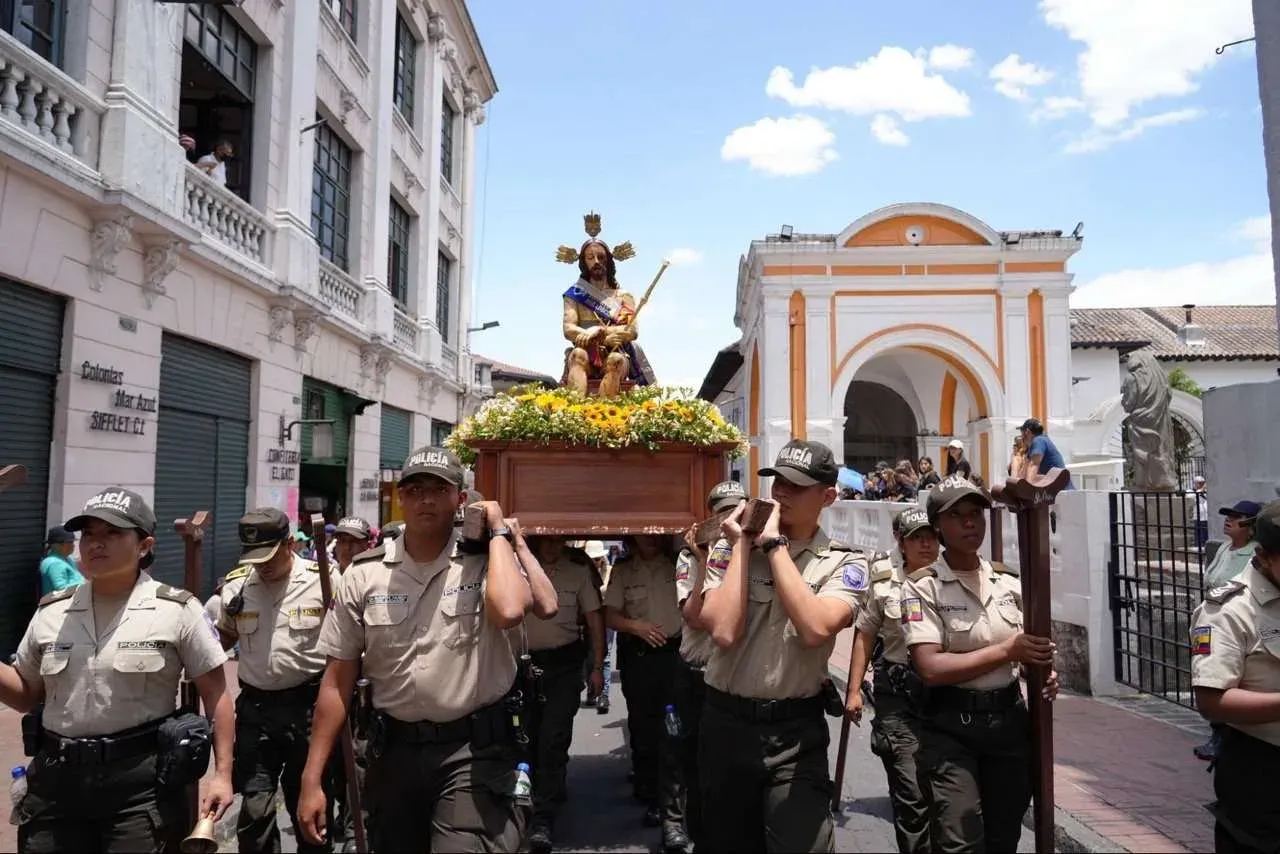
Procession of the Lord of the Sentence in Quito’s historic center
Photo by Quito Tour Bus
Holy Week in Quito is not something you watch from the sidelines: it's something you live. The streets of the Historic Center fill with incense, drums, and thousands of people who year after year retrace the same steps as their grandparents. If you're in the city between March 29 and April 5, 2026, here's what you simply cannot miss.
The opening procession: the Señor de la Sentencia
Before Holy Week officially begins, the Clarist nuns of the Monasterio de Santa Clara (Monastery of Saint Clare) open the celebrations with one of the most intimate and moving processions of the season: the devotion to the Señor de la Sentencia (Lord of the Sentence). The image travels through the streets of the Historic Center accompanied by the faithful, marking the start of the season of penance. This procession was born in 2023 and gains a stronger presence in Quito's religious calendar every year. A special note: Quito Tour Bus is the prioste of this celebration, meaning the organization that presides over it and makes it possible.
Palm Sunday (March 29) - The official beginning
Everything starts at the Basílica del Voto Nacional. At 9:30 a.m., a crowd sets out through the streets of the colonial district in the traditional Palm Sunday Procession, commemorating Jesus's triumphal entry into Jerusalem. The route ends at the Plaza de San Francisco, where at 11:00 a.m. an open-air Mass and the blessing of palms take place under Quito's open sky. If you've never seen the Plaza de San Francisco packed with people, this is your moment.
Arrastre de Caudas (April 1, 4:00 p.m.) - A ritual unlike any other in the world
On Holy Wednesday, one of the most singular rites in all of Catholicism takes place at the Catedral Metropolitana (Metropolitan Cathedral): the Arrastre de Caudas (Dragging of the Caudas). A black mantle is solemnly dragged over the faithful as a sign of mourning for the death of Christ. The ceremony has more than 500 years of history, and Quito is the only city in Ecuador, and one of the few in the world, that keeps it alive. Witnessing it at least once is understanding why Quito was declared a UNESCO World Heritage Site.
Holy Thursday (April 2) - The night of two processions
Holy Thursday brings together two of the most beloved traditions of Quito's Holy Week, and both are worth experiencing.
At 6:00 p.m., the Recorrido por las Siete Iglesias (Pilgrimage of the Seven Churches) begins: a meditative walk through the heritage temples of the Historic Center. Each church welcomes visitors with altars draped in silverwork and purple fabrics, with a tabernacle at the center as a reminder that Jesus has been taken prisoner. It is a quiet, almost intimate experience in the middle of the city.
Just half an hour later, at 6:30 p.m., the Procesión de la Luz (Procession of Light) departs from the Basílica del Voto Nacional: cucuruchos, verónicas, holy souls, and other figures from Quito's tradition move together through the darkness, lighting the way to the Holy Sepulcher.
Good Friday (April 3) - The main event
Good Friday is the heart of Holy Week in Quito, and the city knows it.
At exactly noon, the Procesión de Jesús del Gran Poder (Procession of Jesus of Great Power) departs from the Iglesia de San Francisco (Church of Saint Francis). More than 150,000 people take to the streets of the Historic Center: cucuruchos in purple robes carrying crosses, verónicas in black mantillas, blessed souls, saumeriantes. The image of Christ, a 17th-century sculpture, moves among them in one of the most powerful expressions of faith in all of Latin America. In 2026, a second procession from the south will also depart from the Iglesia de la Virgen del Quinche, in the La Unión neighborhood.
As afternoon fades, at 6:00 p.m., the Plaza de Santo Domingo becomes the starting point of the Procesión del Silencio (Procession of Silence): no music, no shouts, just footsteps and prayers in the historic heart of the city.
Holy Saturday (April 4) - The celebrations spread to the neighborhoods
Holy Week is not just about the Historic Center. On Holy Saturday, the celebrations fan out across the city: the Procesión de la Virgen de los Dolores (Procession of Our Lady of Sorrows) winds through the Loma Grande neighborhood at 2:00 p.m., and the Procesión de la Soledad de María (Procession of the Solitude of Mary) enlivens the streets of San Marcos at 4:00 p.m.
At nightfall, in Alangasí, one of the most visually striking moments of the entire week takes place: the Bendición del Fuego (Blessing of Fire), at 6:00 p.m. in the Parque Central of the parish. The ceremony includes the symbolic burst of "devils" into the church, a representation of the triumph of light over evil that blends faith and spectacle in a way that only the Valle de Los Chillos can offer.
Easter Sunday (April 5) - The closing celebration in Alangasí
Holy Week 2026 closes the way it should: with a celebration. At 6:00 p.m., the church of Alangasí hosts the Pontifical Mass of the Resurrection of Christ, the grand finale of a week that stirs the soul of the entire city.
Source: Municipio del Distrito Metropolitano de Quito - Quito Informa (2026)
https://www.quitoinforma.gob.ec/2026/03/13/semana-santa-2026-procesiones-patrimonio-y-musica-sacra-para-disfrutar-en-quito/
Holy Week Cuisine#
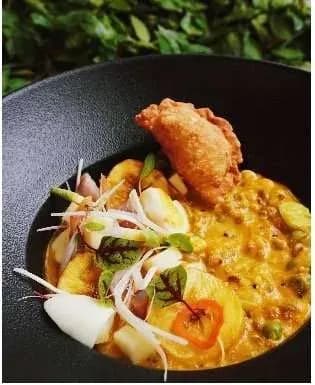
Fanesca
Photo by Restaurante Somos on Instagram
No Ecuadorian celebration is complete without its culinary component, and Holy Week has its star dish: fanesca. This special soup is made with twelve types of grains, symbolizing the twelve disciples of Jesus. Some of the fresh grains used to prepare this delicious dish include peas, corn, fava beans, lupini beans (chochos), lentils, kidney beans, hominy (mote), and mellocos, among others.
This soup, considered a hearty and substantial meal, also includes sambo (a type of squash), pumpkin, slices of hard-boiled egg, green plantain, various types of dough such as small empanadas, cheese, and last but not least, salted cod. The cod “adheres to the prescription of abstinence during Lent and Holy Week, as prescribed by the Catholic Church.” Ministerio de Turismo (s/f). Fanesca: el exquisito sabor de la tradición.
In Quito, Holy Week begins to be felt well in advance—weeks or even months before its official start—as many restaurants in the city start offering the traditional fanesca on their menus as early as February or March. This is because, beyond being just a dish, “fanesca is also a matter of cultural identity. It is a one hundred percent Ecuadorian dish that […] brings together ingredients from both the Coast and the Highlands; and although prepared with slight regional variations, it’s made throughout the entire country.” Ministerio de Turismo (s/f). Fanesca: el exquisito sabor de la tradición.
Preparing fanesca is truly a labor of love, requiring time, dedication, and patience. The recipe varies according to each family’s tradition, bringing generations together in its making and creating a shared sense of joy during this special time of year.
Read more about Ecuadorian fanesca on our blog.
Frequently asked questions#
How Is Holy Week Celebrated in Quito?
In Quito, Holy Week—which this year runs from April 13 to 20—is celebrated with processions, sacred music, and religious traditions. If you’re wondering how Holy Week is observed in Quito, here are the key events:
Palm Sunday: The beginning of Holy Week with a procession that starts at the Basílica del Voto Nacional and ends at Plaza de San Francisco.
Holy Wednesday: The Arrastre de Caudas (Dragging of the Capes) ceremony at the Catedral Metropolitana de Quito.
Holy Thursday: The traditional Tour of the Seven Churches in the historic center and the Procession of the Light.
Good Friday: The Procession of Jesús del Gran Poder.
When Is the Holy Week Holiday in Quito?
During Holy Week, a series of religious activities take place throughout Ecuador, and a mandatory public holiday is observed. In 2025, the official holiday falls on Friday, April 18, with the break extending through Saturday, April 19, and Sunday, April 20.
What Activities Can You Do in Quito on Good Friday?
Good Friday is a day devoted to reenacting the Via Crucis—the path Jesus walked while carrying his wooden cross. This activity is typically carried out as a procession, and in Quito, on April 18, 2025, the Procession of Jesús del Gran Poder will take place.
This pilgrimage is one of the city’s most deeply rooted religious traditions and unfolds in the heart of Quito’s historic center. It blends popular beliefs with ritual practices that have taken place since the early years of Spanish conquest and colonization.
When Is the Procession in Quito?
In 2025, several processions will take place in Quito during Holy Week. Among the most significant are: the Procession of the Lord of the Sentence (April 6), Palm Sunday (April 13), Dragging of the Capes (April 16), Tour of the Seven Churches and Procession of the Light (April 17), and the Procession of Jesús del Gran Poder (April 18).
To learn more about the processions happening during Holy Week in Quito, be sure to check the Holy Week Liturgical Schedule – Quito 2025.
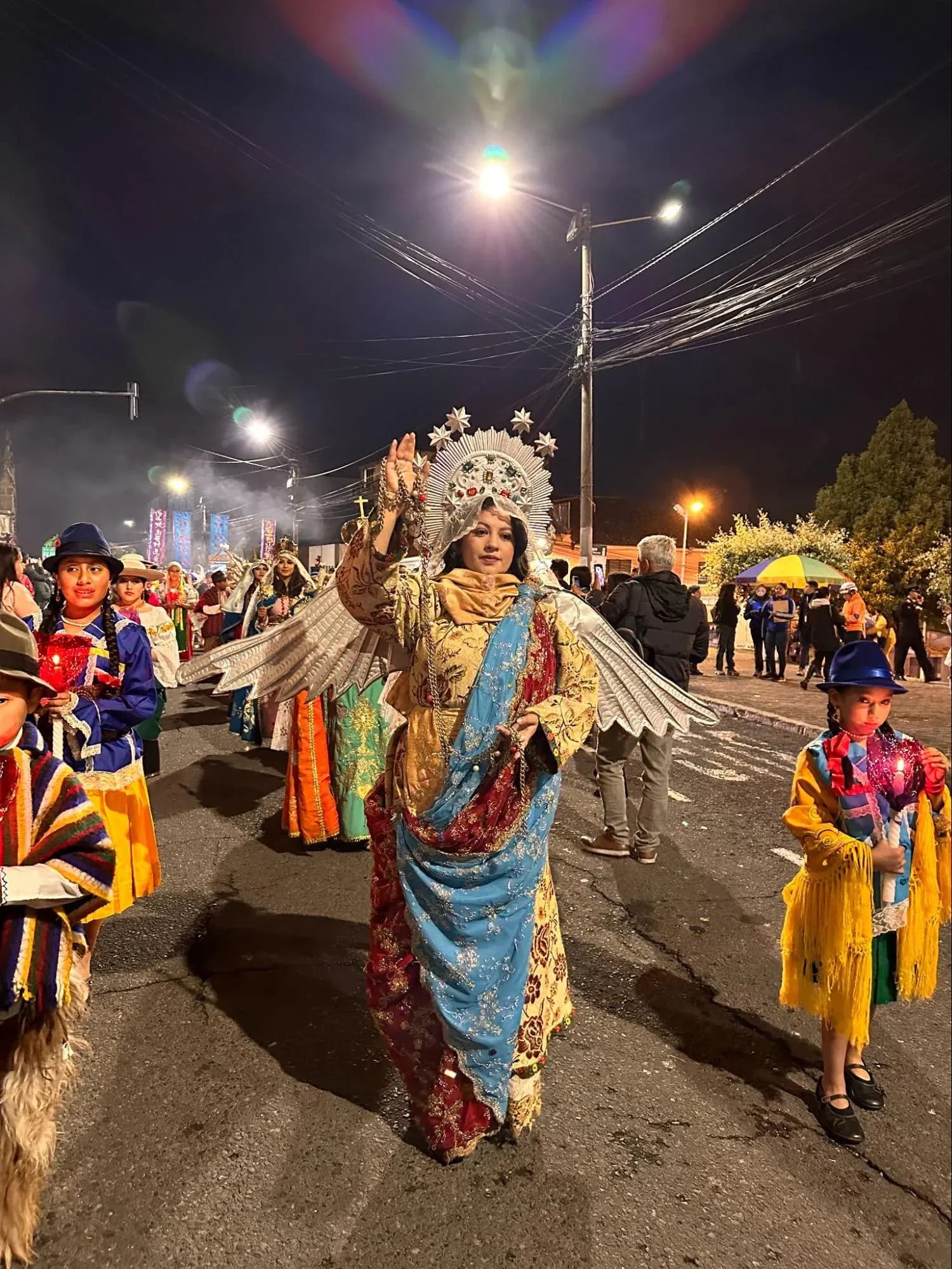
Procession of the Light in Quito’s historic center
Photo by Quito Tour Bus
Holy Week in Quito is a unique experience that goes beyond religion. It’s a journey through the history, identity, and traditions of a city that pulses with faith, art, and culture. This important Christian commemoration is celebrated with processions, sacred music, and a variety of religious customs.
It’s the perfect time to immerse yourself in spiritual practices and savor the beloved fanesca, because with every procession, every prayer, and every spoonful of this rich dish, the spirit of a celebration that has endured through time is brought back to life—adapting without ever losing its essence.
For Quiteños, Holy Week isn’t just a date on the calendar—it’s a deeply felt experience, something to be shared and carried in the heart.
To fully experience the cultural richness and diversity of Holy Week in Ecuador, visit the city of Quito. On our Quito City Tour, we’ll take you through the largest and one of the best-preserved historic centers in Latin America. It’s a journey where you’ll be able to immerse yourself in local religious traditions, take part in the celebrations, and enjoy a one-of-a-kind experience that captures the essence and charm of this incredible Latin American destination.