Wall of Tears, Isabela – Galápagos
The Muro de las Lágrimas (Wall of Tears) on Isabela is a historic site in the Galápagos built during the penal colony period (1946-1959). It offers 3 miles of extraordinary trail where you’ll see giant tortoises, pink flamingos, and marine iguanas—a truly unforgettable journey. Additionally, the Muro de las Lágrimas is one of the few important sites in the Galápagos where you don’t need a mandatory guide and entry is completely free, facts that make it an authentic exploration experience in Puerto Villamil, Isabela. Though it’s also possible to visit with a tour guide for those who want more information. Below, we’ll tell you about this fascinating destination in the enchanted islands.
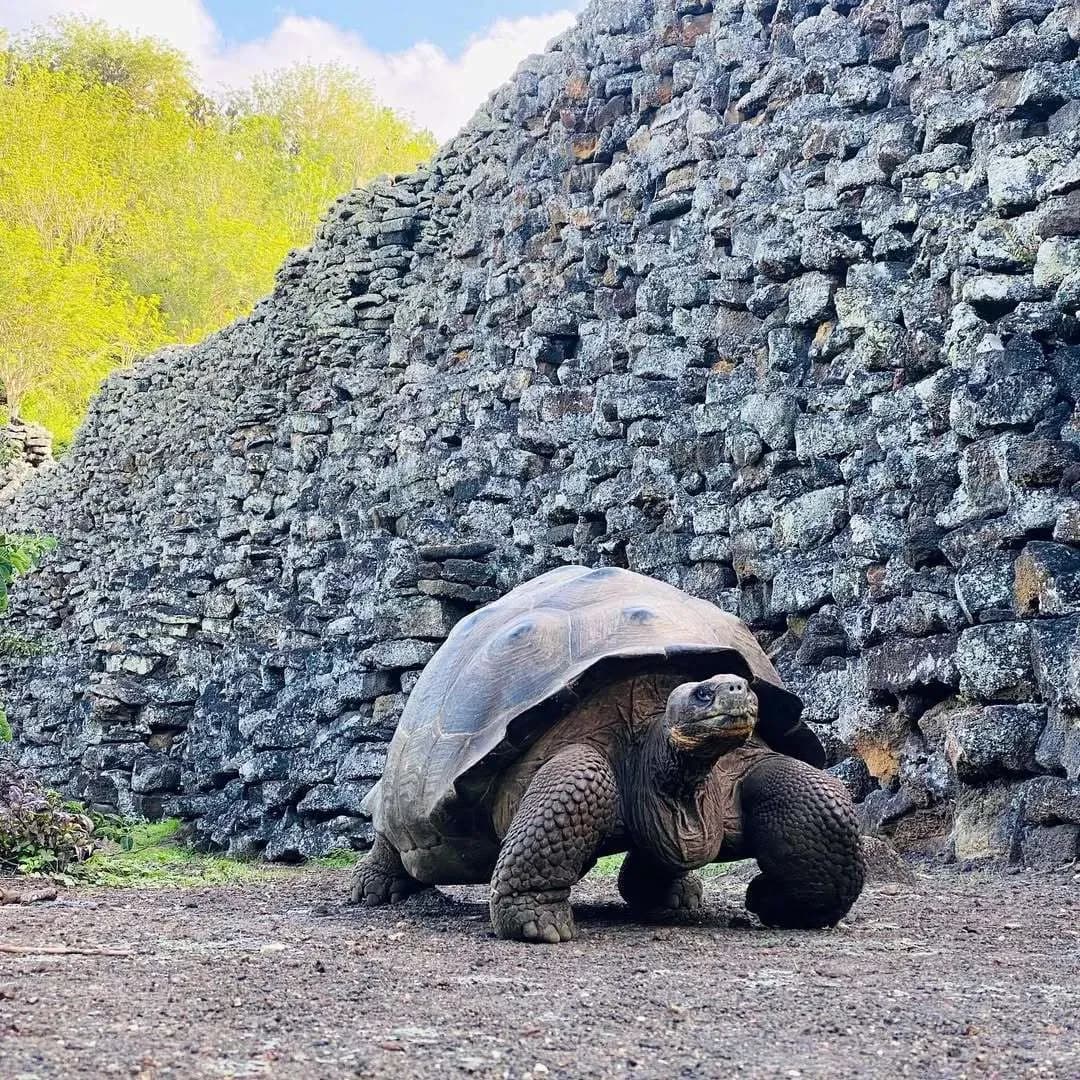
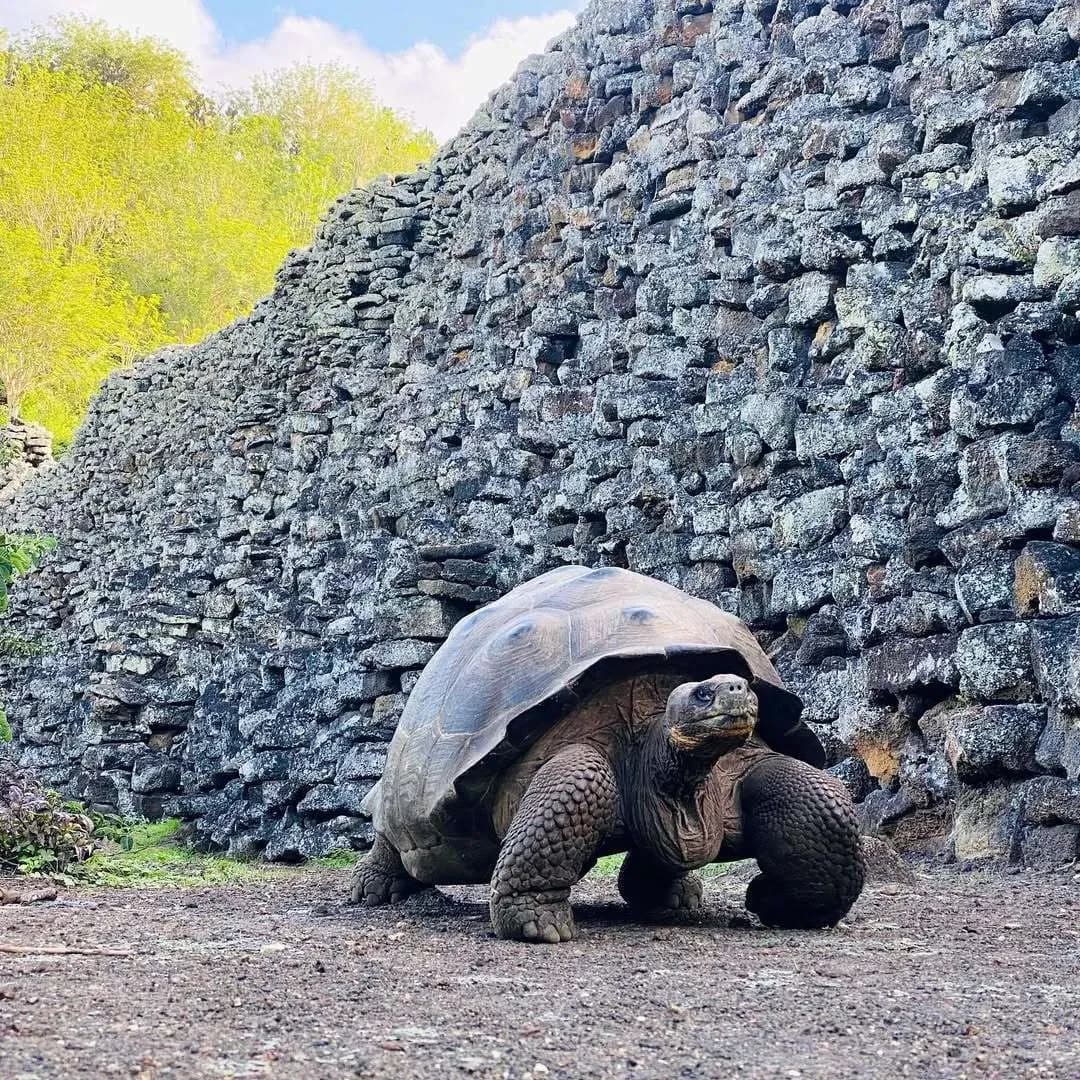
Foreground, Galápagos tortoise; background, Wall of Tears. Photo by jacadena24 on Instagram.
Tragic History of the Wall of Tears: The Isabela Penal Colony#
The history of the Muro de las Lágrimas (Wall of Tears) begins in 1946 when President José María Velasco Ibarra established a penal colony on Isabela, taking advantage of an old U.S. military base from World War II. For thirteen years, until 1959, hundreds of prisoners were forced to build this volcanic stone wall 23 feet high, 328 feet long, and 10 feet wide, with no practical purpose other than punishment.
Why is it called the Wall of Tears? The prisoners worked under Ecuador’s scorching sun, carrying enormous volcanic rocks without enough water or rest. It’s estimated that hundreds died during its construction. Locals say you can still hear laments at sunset, especially after learning about the theatrical escape of 1958, when a group of prisoners staged a play to distract the guards while others attempted to flee. The escape failed for many, resulting in even more severe punishments.
The wall remains as a place of historical memory, a somber reminder of the harsh conditions of the penal colony, a symbol of suffering but also of resistance, which has become a tourist attraction and, today, is an unmissable historical stop for those visiting Isabela Island in the Galápagos.
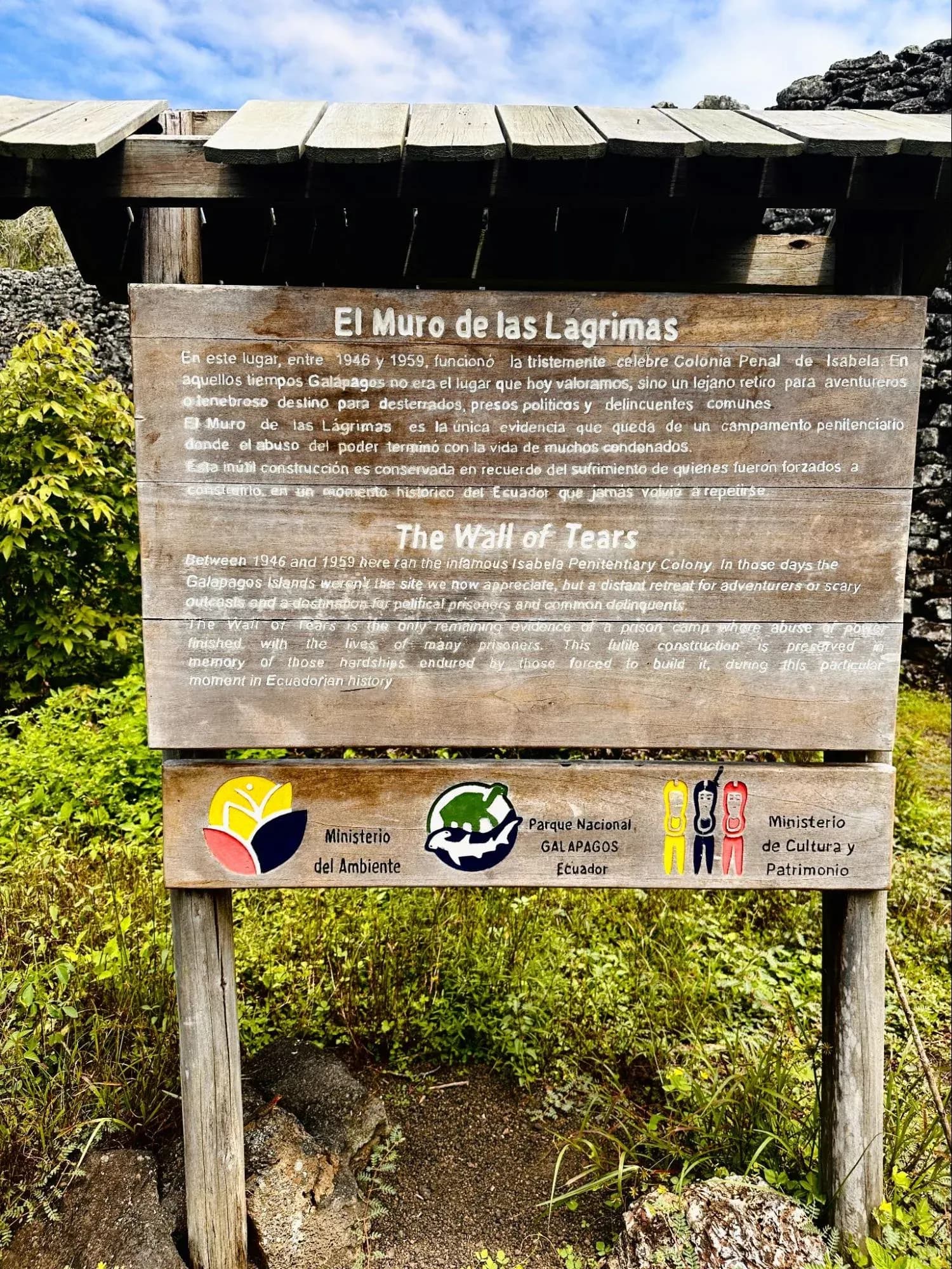
Legend of the Muro de las Lágrimas (Wall of Tears) in Galápagos National Park. Photo by Quito Tour Bus.
How to Get to the Wall of Tears?#
The Muro de las Lágrimas (Wall of Tears) is located on Isabela, the largest island in the Galápagos archipelago. The wall is easily accessible, located just 3 miles from the port city of Puerto Villamil, where most tourists stay when visiting Isabela.
To visit the Muro de las Lágrimas (Wall of Tears), you can rent a bicycle from one of the local agencies or hotels in town, or you can make the journey on foot. Remember that motorized vehicles are prohibited on the trail to the Muro de las Lágrimas, meaning you can’t go by taxi or car. We’ll tell you a bit more about these two options:
By bicycle:
- Distance: 3-4 miles from Puerto Villamil
- Time: 30-45 minutes each way
- Rental cost: $15-25 per day
- Available at: Multiple shops on the main street
- A reasonable level of physical fitness is necessary to reach the Muro de las Lágrimas (Wall of Tears). The road is uneven and the heat can be exhausting, so don’t underestimate this trip.
Walking:
- Time: 1.5 – 2 hours each way (4-5 hours total)
- Difficulty: Moderate (flat terrain but intense sun)
- Recommended only for experienced hikers
The trail begins at the Galápagos National Park checkpoint (the only restrooms available along the entire route). Access hours are from 6 AM to 6 PM, and there’s no additional entrance fee, as it’s included in your Isabela entry fee.
Remember that while you can reach the Muro de las Lágrimas (Wall of Tears) in just a few hours, you can also dedicate an entire day to this excursion because there are many interesting places to stop along the trail, from ocean viewpoints to secluded beaches and mangrove forests.
What to See on the Trail? Wildlife and Points of Interest#
The real treasure of the Muro de las Lágrimas Galápagos is the path you’ll travel to reach the famous wall. Along the way, you’ll find yourself on a sand and stone road surrounded by local flora and, in this order, you’ll encounter:
Mile 1 - Playa del Amor (Love Beach)
A small white sand bay where marine iguanas sunbathe and occasionally juvenile sea lions can be seen.

Playa del Amor (Love Beach). Isabela Island, Galápagos, Ecuador. Photo by @viajoporisso on Instagram.
Mile 1.5 - Pozas de Flamingos (Flamingo Ponds)
Isabela’s wetlands are home to the largest population of pink flamingos in the Galápagos. Best viewing: 6-9 AM when they’re most active feeding.
Mile 2 - Túnel del Estero (Estuary Tunnel)
An impressive natural mangrove tunnel (all 4 endemic species) where you’ll find Darwin’s finches and Galápagos mockingbirds.
Mile 2.5 - Cerro Orchilla Viewpoint
An optional trail leads to the viewpoint with panoramic views. Here you frequently see giant Galápagos tortoises, especially during the rainy season (January-May).
Miles 3-4 - El Muro (The Wall)
The structure itself, with stairs that allow you to climb up for a 360° view of Isabela. It’s the best spot for photos, especially with the golden light of sunset.
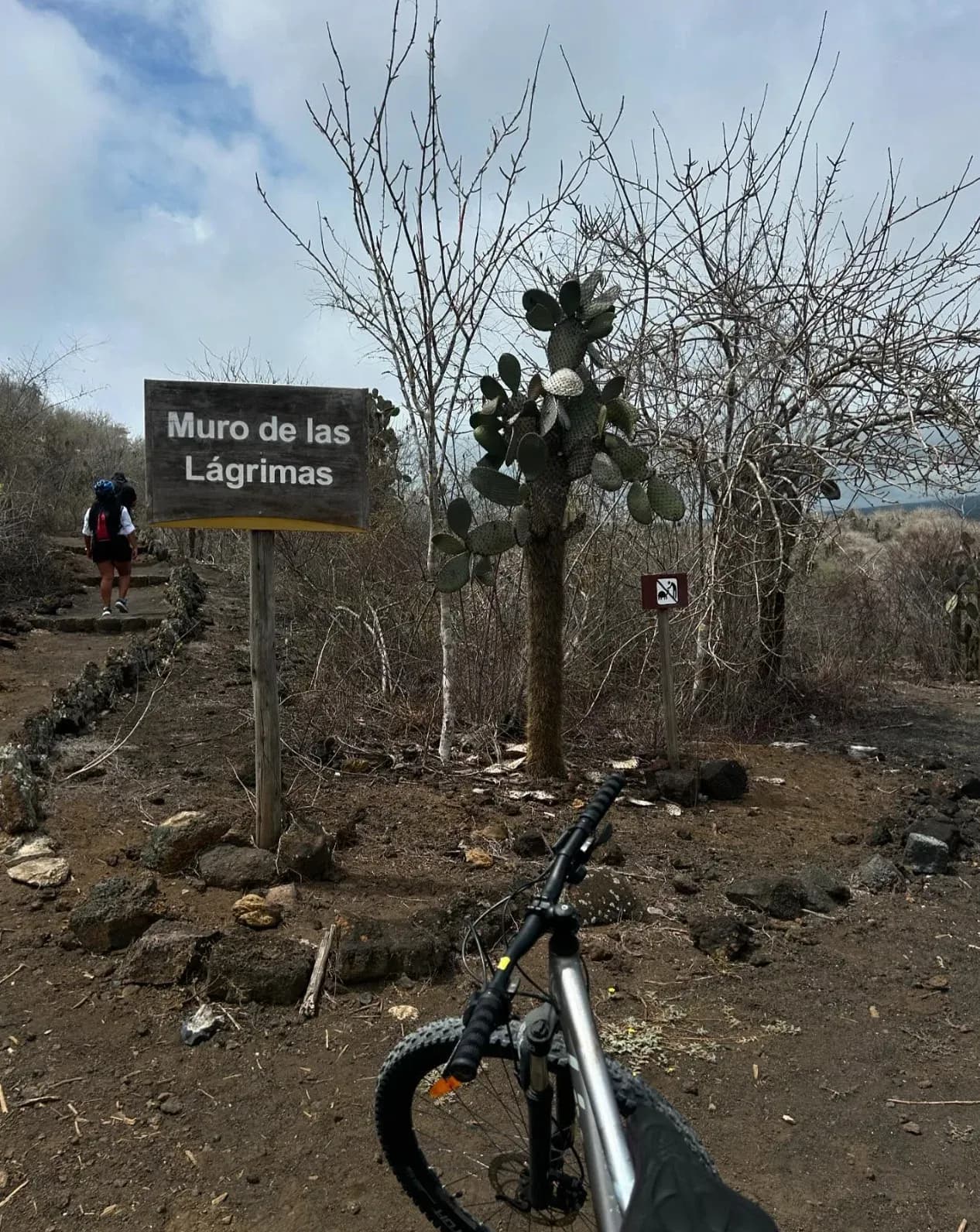
Bicycle route to the Muro de las Lágrimas (Wall of Tears). Photo by jenniffertutiven on Instagram.
Practical Tips and Best Time to Visit#
Best time to visit :
- Ideal: 6-9 AM (cool weather, active wildlife)
- Alternative: 4-6 PM (perfect light for photography)
- Avoid: 11 AM-2 PM (extreme sun, 95°F+)
What to bring to the Muro de las Lágrimas (Wall of Tears)?
- Plenty of water
- SPF 50+ sunscreen
- Hat or cap
- Energy snacks (no stores for 7.5 miles)
- Closed-toe shoes (uneven rocky terrain)
- Insect repellent (especially during wet season)
- Swimsuit and towel (useful if you want to swim at nearby beaches)
Best time of year:
- December-May: Warm season (75-86°F), calm seas, better underwater visibility. Ideal for combining with snorkeling at Concha de Perla.
June-November: Cool season (68-79°F), occasional drizzle, penguin sightings at Las Tintoreras.
Legends and Complementary Activities#
The legend of the Muro de las Lágrimas (Wall of Tears) says that at sunset you can hear screams and laments from the deceased prisoners. Many visitors report a “heavy energy” at the site, especially after learning its history. While it’s just a local legend, it adds an intriguing element to the visit.
Is it worth visiting the Muro de las Lágrimas (Wall of Tears)? Honestly, if you’re looking for an impressive structure, you might be disappointed. But if you appreciate the human history of the Galápagos and enjoy cycling or hiking with guaranteed wildlife viewing, this site is unmissable.
We recommend combining your visit to the Muro de las Lágrimas (Wall of Tears) with the following activities:
- Morning: Muro de las Lágrimas (3-4 hours)
- Afternoon: Las Tintoreras (approximately 3-hour tour)
- Sunset: Concha de Perla (free snorkeling)
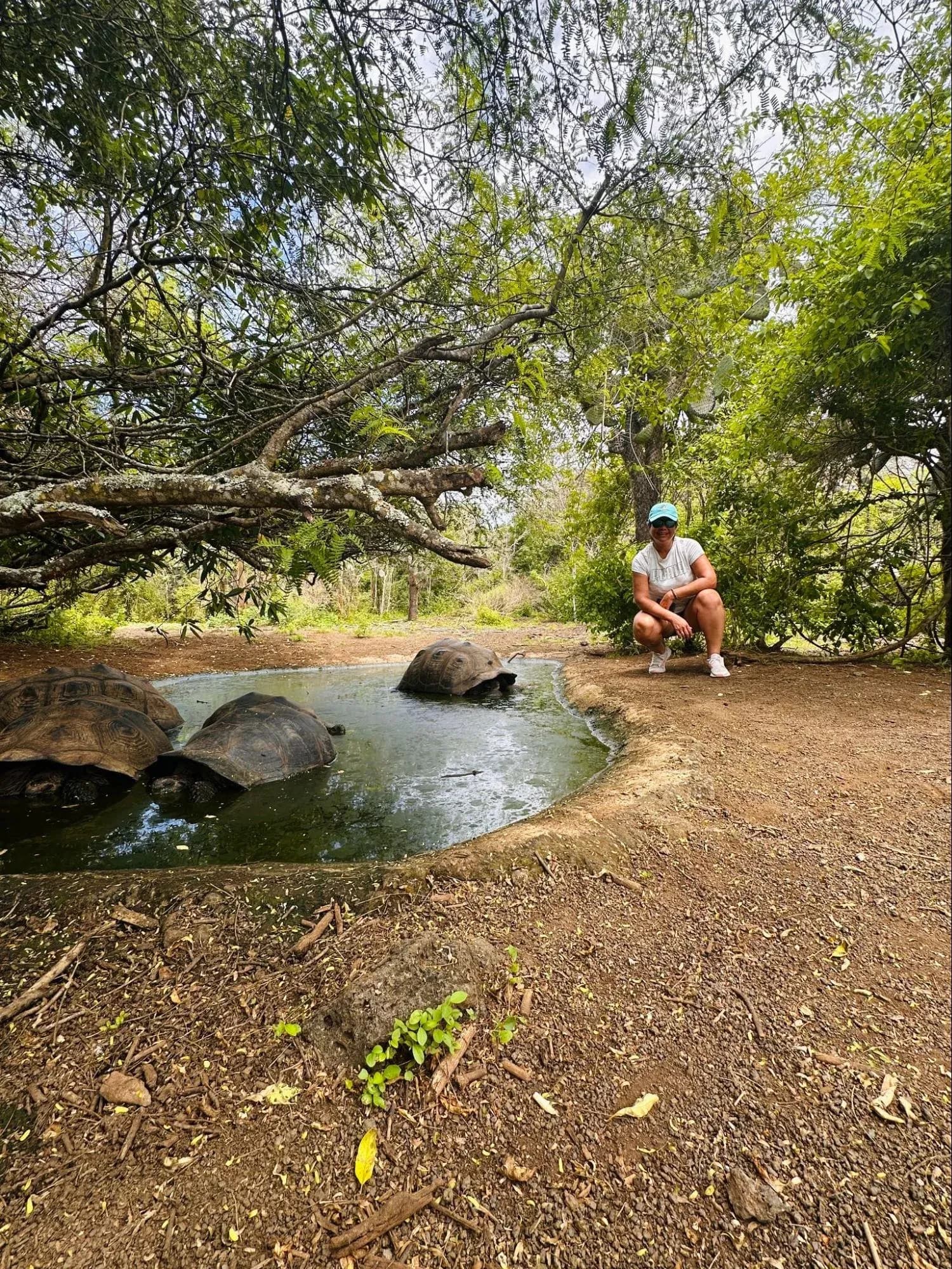
Encounter with tortoises on the way to the Muro de las Lágrimas (Wall of Tears) Photo by Quito Tour Bus.
Recommended tours#
Ready to experience the most spectacular volcanic adventure in the Galápagos? Explore our Galápagos tours and discover why thousands of travelers choose our unique experiences to discover the wonders of the archipelago.
Discover with our company all the wonders that make the Galápagos Islands a truly unique destination in the world. We have all the information you need to take an ideal trip. We recommend reading about what to do in the Galápagos, what to do on Isabela, and what is the best time to travel to the Galápagos.
The Muro de las Lágrimas (Wall of Tears) represents a unique facet of the Galápagos that transcends nature: the human history of survival and suffering. Unlike other attractions in Puerto Villamil, here you’ll experience the islands independently, at your own pace, without crowds. It’s a reminder that the Galápagos is not only a natural paradise, but a place with complex and moving human stories.
If you plan to visit Isabela, include the Muro de las Lágrimas (Wall of Tears) in your itinerary, but with the right expectations: go for the history and the trail, not for the wall itself. For a complete Galápagos experience that combines history, nature, and adventure, the Muro de las Lágrimas is a must-stop that you’ll remember not for its grandeur, but for its profound humanity.
Are you planning your trip to the Galápagos? Contact us to learn what to do on Isabela. We’ll create a personalized itinerary that includes the Muro de las Lágrimas (Wall of Tears) and the best experiences on this iconic island.
Check out all our Galápagos Tours, as well as our notes about what to do in the Galápagos and what’s the best time to travel to the Galápagos. Travel with us to this natural paradise, where fun and comfort are guaranteed.
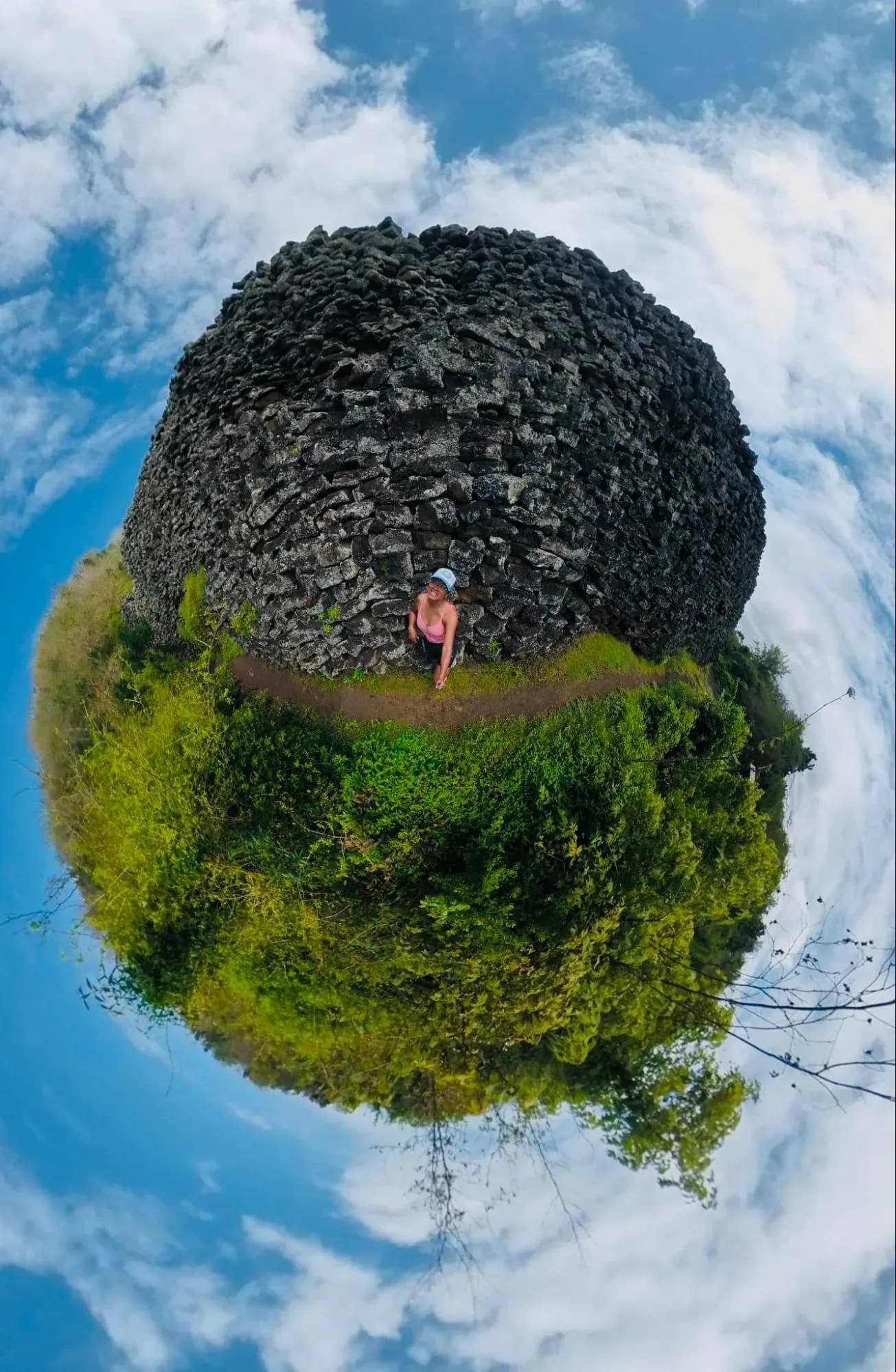
Muro de las Lágrimas (Wall of Tears). Photo by Quito Tour Bus.